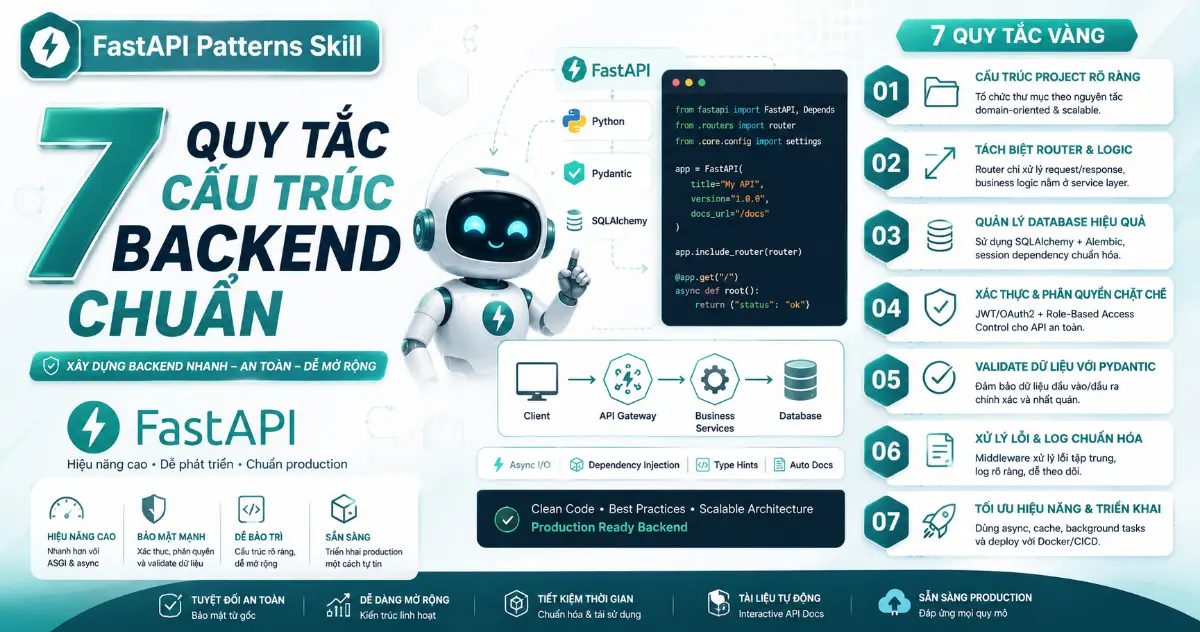
Thú thật là, xây dựng một hệ thống backend sẵn sàng cho môi trường production đòi hỏi nhiều hơn là chỉ viết vài dòng code chạy được. Khi quy mô dự án phình to, nếu bạn không có một cấu trúc chuẩn mực ngay từ đầu, codebase sẽ nhanh chóng biến thành một bãi rác công nghệ khổng lồ. FastAPI nổi tiếng với tốc độ phát triển thần tốc, nhưng nó lại mang tiếng là quá ‘tự do’ vì không áp đặt bất kỳ cấu trúc thư mục cụ thể nào. Điểm đáng chú ý ở đây chính là sự tự do này: nó có thể là thiên đường cho các kỹ sư kinh nghiệm, nhưng lại là cái bẫy chết người cho những ai mới bắt đầu. Đó là lý do vì sao việc áp dụng FastAPI Patterns Skill lại quan trọng đến thế.
Nói một cách đơn giản, bộ FastAPI Patterns Skill chính là tập hợp các phương pháp thiết kế tốt nhất được đúc kết từ thực tiễn. Bộ hướng dẫn này sẽ đi sâu vào các khía cạnh xương sống như cấu trúc dự án FastAPI tách biệt trách nhiệm, quản lý cấu hình tập trung, validate dữ liệu chặt chẽ qua Pydantic v2 schemas, cơ chế dependency injection FastAPI và viết kiểm thử tự động. Hãy tin mình đi, việc áp dụng đồng bộ các mẫu thiết kế này sẽ giúp mã nguồn của bạn dễ bảo trì, dễ mở rộng và vận hành êm ái trên production.
Quy tắc 1: Cấu Trúc Dự Án FastAPI Tách Biệt Theo Trách Nhiệm
Thực tế thì, việc thiết lập một cấu trúc dự án FastAPI khoa học chính là nền móng vững chắc quyết định sự sống còn của dự án. Nguyên lý cốt lõi ở đây là phân tách trách nhiệm (Separation of Concerns). Toàn bộ logic của ứng dụng nên được gói gọn trong thư mục gốc app. Cách bố trí này không chỉ giúp bạn giải quyết triệt để lỗi import vòng (circular imports) vốn cực kỳ phiền phức, mà còn giúp các thành viên mới hòa nhập với dự án nhanh hơn.
my_app/
|-- app/
|   |-- main.py               # App factory, lifespan, middleware
|   |-- config.py             # Settings via pydantic-settings
|   |-- dependencies.py       # Shared FastAPI dependencies
|   |-- database.py           # SQLAlchemy engine + session
|   |-- routers/              # HTTP routers for endpoints
|   |   `-- users.py
|   |-- models/               # SQLAlchemy ORM models
|   |   `-- user.py
|   |-- schemas/              # Pydantic request/response schemas
|   |   `-- user.py
|   `-- services/             # Business logic layer
|       `-- user_service.py
|-- tests/                    # Integration and unit tests
|   |-- conftest.py
|   `-- test_users.py
|-- pyproject.toml
`-- .env
Nếu phân tích kỹ sơ đồ trên, bạn sẽ thấy tính mạch lạc trong cách thiết kế của FastAPI Patterns Skill. Các file routers đóng vai trò như người gác cổng chỉ tiếp nhận request và trả về response; services xử lý logic nghiệp vụ; models đại diện cho database; và schemas định hình dữ liệu đầu ra/vào. Phép chia này mang lại lợi thế to lớn: khi bạn cần thay đổi cơ sở dữ liệu hoặc logic nghiệp vụ, client và router bên ngoài sẽ hoàn toàn không bị ảnh hưởng.
Quy tắc 2: Thiết Kế App Factory và Quản Lý Vòng Đời Lifespan
Mình thấy nhiều bạn thường có thói quen khởi tạo ứng dụng FastAPI trực tiếp ở phạm vi global của file. Thực sự thói quen này rất có hại khi viết unit test vì app bị dính chặt vào các dependency cứng. Giải pháp từ FastAPI Patterns Skill là sử dụng mẫu thiết kế App Factory (khởi tạo app qua hàm create_app). Đi kèm với đó, việc dùng lifespan manager là cách tốt nhất để quản lý các sự kiện startup và shutdown một cách đồng bộ.
from contextlib import asynccontextmanager
from fastapi import FastAPI
from fastapi.middleware.cors import CORSMiddleware

from app.config import settings
from app.database import engine, Base
from app.routers import users


@asynccontextmanager
async def lifespan(app: FastAPI):
    # Tu dong khoi tao database trong moi truong phat trien
    async with engine.begin() as conn:
        await conn.run_sync(Base.metadata.create_all)
    yield
    # Giai phong cac tai nguyen ket noi khi shutdown ung dung
    await engine.dispose()


def create_app() -> FastAPI:
    app = FastAPI(
        title=settings.app_name,
        version=settings.app_version,
        lifespan=lifespan,
    )

    app.add_middleware(
        CORSMiddleware,
        allow_origins=settings.allowed_origins,
        allow_credentials=settings.allow_credentials,
        allow_methods=settings.allowed_methods,
        allow_headers=settings.allowed_headers,
    )

    app.include_router(users.router, prefix="/users", tags=["users"])

    return app


app = create_app()
Có một chi tiết thú vị là asynccontextmanager giúp giải quyết triệt để vấn đề rò rỉ kết nối. Toàn bộ logic chạy trước từ khóa yield sẽ được thực thi khi server bắt đầu khởi động. Ngay khi server nhận được lệnh shutdown (ví dụ container bị stop), các lệnh sau yield sẽ được kích hoạt để đóng các database connection pools. Điều này đảm bảo hệ thống không bị treo hoặc rò rỉ tài nguyên ra bên ngoài.
Quy tắc 3: Quản Lý Cấu Hình Với Thư Viện pydantic-settings
Vấn đề là, rất nhiều lập trình viên vẫn giữ thói quen sử dụng hàm os.getenv rải rác khắp nơi trong codebase. Cách làm này cực kỳ thiếu an toàn vì không kiểm soát được kiểu dữ liệu và giá trị cấu hình. Theo tiêu chuẩn của FastAPI Patterns Skill, việc sử dụng pydantic-settings là cách tốt nhất để tập trung hóa cấu hình, tự động chuyển đổi định dạng và validate tính hợp lệ của các biến môi trường trước khi app khởi động.
from pydantic_settings import BaseSettings, SettingsConfigDict


class Settings(BaseSettings):
    model_config = SettingsConfigDict(env_file=".env", env_file_encoding="utf-8")

    app_name: str = "My App"
    app_version: str = "0.1.0"
    debug: bool = False

    database_url: str
    secret_key: str
    algorithm: str = "HS256"
    access_token_expire_minutes: int = 30

    # Pydantic v2 tu dong phan tich danh sach tu chuoi JSON trong bien moi truong
    allowed_origins: list[str] = ["http://localhost:3000"]
    allowed_methods: list[str] = ["GET", "POST", "PATCH", "DELETE", "OPTIONS"]
    allowed_headers: list[str] = ["Authorization", "Content-Type"]
    allow_credentials: bool = True


settings = Settings()
Bạn cứ tưởng tượng, nếu thiếu biến database_url hoặc sai định dạng port, ứng dụng sẽ lập tức crash-on-start (cơ chế fail-fast). Trong môi trường CI/CD hay Kubernetes, tính năng này cực kỳ đáng giá. Nó giúp bạn phát hiện lỗi cấu hình ngay lập tức ở bước deploy thay vì để ứng dụng chạy âm thầm với các thiết lập sai lệch, rồi ném ra một tá lỗi runtime bí ẩn cho người dùng cuối.
Quy tắc 4: Validate Dữ Liệu Chặt Chẽ Với Pydantic v2 Schemas
Nếu bạn hỏi mình sự khác biệt lớn nhất giữa một ứng dụng amateur và một ứng dụng production-ready là gì, mình sẽ trả lời ngay: đó là cách họ thiết kế schema. Khi làm việc với Pydantic v2 schemas, nguyên tắc bất di bất dịch là phân tách rõ ràng giữa Request payload (dữ liệu nhận vào) và Response payload (dữ liệu gửi đi). Điều này giúp bảo mật thông tin tối đa, ngăn rò rỉ các trường nhạy cảm như password hash ra API client.
from datetime import datetime
from pydantic import BaseModel, EmailStr, Field, model_validator


class UserBase(BaseModel):
    email: EmailStr
    username: str = Field(min_length=3, max_length=50)


class UserCreate(UserBase):
    password: str = Field(min_length=8)
    password_confirm: str

    @model_validator(mode="after")
    def passwords_match(self) -> "UserCreate":
        if self.password != self.password_confirm:
            raise ValueError("Passwords do not match")
        return self


class UserUpdate(BaseModel):
    username: str | None = Field(default=None, min_length=3, max_length=50)
    email: EmailStr | None = None


class UserResponse(UserBase):
    id: int
    is_active: bool
    created_at: datetime

    model_config = {"from_attributes": True}


class UserListResponse(BaseModel):
    total: int
    items: list[UserResponse]
Có một chi tiết kỹ thuật đáng chú ý là decorator @model_validator(mode="after") trong Pydantic v2 đã thay thế hoàn toàn root validator cũ. Nó giúp validate logic phức tạp (như so khớp password và confirm password) nhanh chóng và rõ ràng hơn. Đồng thời, cấu hình mới model_config = {"from_attributes": True} giúp Pydantic tự động ánh xạ dữ liệu từ model database sang schema API một cách an sau.
Quy tắc 5: Ứng Dụng Dependency Injection FastAPI và Annotated
Hệ thống dependency injection FastAPI thực sự là một vũ khí hạng nặng. Để phát huy tối đa sức mạnh của nó và giữ cho codebase của bạn không bị rối mắt, hãy tận dụng thư viện Annotated của Python 3.9+. Việc này không chỉ giúp tái sử dụng các dependency cực kỳ dễ dàng mà còn biến các endpoint của bạn thành những hàm sạch đẹp, dễ viết unit test nhờ khả năng mock thông qua dependency_overrides.
from typing import Annotated, AsyncGenerator
from fastapi import Depends, HTTPException, status
from fastapi.security import OAuth2PasswordBearer
from jose import JWTError, jwt
from sqlalchemy.ext.asyncio import AsyncSession

from app.config import settings
from app.database import AsyncSessionLocal
from app.models.user import User

oauth2_scheme = OAuth2PasswordBearer(tokenUrl="/users/token")


async def get_db() -> AsyncGenerator[AsyncSession, None]:
    async with AsyncSessionLocal() as session:
        try:
            yield session
        except Exception:
            await session.rollback()
            raise


async def get_current_user(
    token: Annotated[str, Depends(oauth2_scheme)],
    db: Annotated[AsyncSession, Depends(get_db)],
) -> User:
    credentials_exception = HTTPException(
        status_code=status.HTTP_401_UNAUTHORIZED,
        detail="Could not validate credentials",
        headers={"WWW-Authenticate": "Bearer"},
    )
    try:
        payload = jwt.decode(token, settings.secret_key, algorithms=[settings.algorithm])
        subject = payload.get("sub")
        if subject is None:
            raise credentials_exception
        user_id = int(subject)
    except (JWTError, TypeError, ValueError):
        raise credentials_exception

    user = await db.get(User, user_id)
    if user is None:
        raise credentials_exception
    return user


async def get_current_active_user(
    current_user: Annotated[User, Depends(get_current_user)],
) -> User:
    if not current_user.is_active:
        raise HTTPException(status_code=status.HTTP_403_FORBIDDEN, detail="Inactive user")
    return current_user


# Dinh nghia cac kieu du lieu dependency tai su dung
DbDep = Annotated[AsyncSession, Depends(get_db)]
CurrentUserDep = Annotated[User, Depends(get_current_user)]
ActiveUserDep = Annotated[User, Depends(get_current_active_user)]
Bằng việc khai báo các alias như DbDep hay CurrentUserDep, bạn sẽ không còn phải viết đi viết lại cú pháp Depends(...) dài dòng. Khi cần phát triển một endpoint mới, bạn chỉ cần khai báo kiểu dữ liệu cho tham số, FastAPI sẽ lo liệu toàn bộ luồng xử lý và tự động giải phóng session cơ sở dữ liệu sau khi kết thúc request. Code cực kỳ gọn gàng!
Quy tắc 6: Phân Lớp Service Layer và Quản Lý Transaction Trực Tiếp
Thú thật là, lỗi phổ biến nhất mà mình thấy ở các dự án FastAPI là việc lập trình viên cố tống hết logic nghiệp vụ vào trong router. Hậu quả là router phình to một cách đáng sợ và không thể tái sử dụng. Để khắc phục triệt để, FastAPI Patterns Skill khuyến nghị áp dụng lớp Service Layer chuyên trách để xử lý logic, giữ cho router mỏng nhất có thể. Đây là nơi bạn kiểm soát các database transaction một cách an toàn.
# app/services/user_service.py
from datetime import datetime, timedelta, timezone
from jose import jwt
from passlib.context import CryptContext
from sqlalchemy import func, select
from sqlalchemy.exc import IntegrityError
from sqlalchemy.ext.asyncio import AsyncSession
from app.config import settings
from app.models.user import User
from app.schemas.user import UserCreate, UserUpdate

pwd_context = CryptContext(schemes=["bcrypt"], deprecated="auto")


class DuplicateUserError(Exception):
    """Nem loi khi trung lap email hoac username trong he thong."""


class UserService:
    def __init__(self, db: AsyncSession) -> None:
        self.db = db

    async def get_by_email(self, email: str) -> User | None:
        result = await self.db.execute(select(User).where(User.email == email))
        return result.scalar_one_or_none()

    async def create(self, payload: UserCreate) -> User:
        user = User(
            email=payload.email,
            username=payload.username,
            hashed_password=pwd_context.hash(payload.password),
        )
        self.db.add(user)
        try:
            # Commit atomic de bao ve tinh toan ven du lieu o muc database
            await self.db.commit()
        except IntegrityError as exc:
            await self.db.rollback()
            raise DuplicateUserError from exc
        await self.db.refresh(user)
        return user

    async def list(self, skip: int = 0, limit: int = 20) -> tuple[list[User], int]:
        total_result = await self.db.execute(select(func.count(User.id)))
        total = total_result.scalar_one()
        # Bat buoc sap xep xac dinh de tranh bo sot du lieu khi phan trang
        result = await self.db.execute(
            select(User).order_by(User.id).offset(skip).limit(limit)
        )
        return list(result.scalars()), total

    async def update(self, user_id: int, payload: UserUpdate) -> User | None:
        user = await self.db.get(User, user_id)
        if user is None:
            return None
        for field, value in payload.model_dump(exclude_unset=True).items():
            setattr(user, field, value)
        try:
            await self.db.commit()
        except IntegrityError as exc:
            await self.db.rollback()
            raise DuplicateUserError from exc
        await self.db.refresh(user)
        return user

    async def authenticate(self, email: str, password: str) -> str | None:
        user = await self.get_by_email(email)
        if user is None or not pwd_context.verify(password, user.hashed_password):
            return None
        expire = datetime.now(timezone.utc) + timedelta(
            minutes=settings.access_token_expire_minutes
        )
        return jwt.encode(
            {"sub": str(user.id), "exp": expire},
            settings.secret_key,
            algorithm=settings.algorithm,
        )
Hãy chú ý đến cách lớp UserService bắt ngoại lệ IntegrityError và gọi await self.db.rollback(). Đây là kỹ thuật phòng vệ quan trọng giúp bảo vệ toàn vẹn dữ liệu ở mức nguyên tử (atomic updates). Việc đẩy transaction xuống lớp Service giúp code của bạn không bị phân tán và ngăn ngừa các lỗi tranh chấp dữ liệu (race conditions) hiệu quả khi có nhiều luồng thực thi đồng thời.
Quy tắc 7: Thiết Kế Router Mỏng Để Điều Hướng Luồng Nghiệp Vụ
Khi toàn bộ nghiệp vụ phức tạp đã được bàn giao cho Service Layer theo đúng tinh thần của FastAPI Patterns Skill, router của bạn sẽ trở nên vô cùng tinh gọn. Lúc này, router chỉ làm nhiệm vụ điều phối: đón nhận request, chuyển việc cho service tương ứng, bắt các lỗi nghiệp vụ để map thành HTTP status code phù hợp và trả về kết quả đã validate. Code cực kỳ sạch sẽ và dễ đọc!
# app/routers/users.py
from typing import Annotated
from fastapi import APIRouter, HTTPException, Query, status
from fastapi.security import OAuth2PasswordRequestForm
from app.dependencies import ActiveUserDep, DbDep
from app.schemas.user import UserCreate, UserResponse, UserUpdate, UserListResponse
from app.services.user_service import DuplicateUserError, UserService

router = APIRouter()


@router.post("/", response_model=UserResponse, status_code=status.HTTP_201_CREATED)
async def create_user(payload: UserCreate, db: DbDep) -> UserResponse:
    service = UserService(db)
    try:
        return await service.create(payload)
    except DuplicateUserError:
        raise HTTPException(status_code=400, detail="Email already registered")


@router.get("/me", response_model=UserResponse)
async def get_me(current_user: ActiveUserDep) -> UserResponse:
    return current_user


@router.get("/", response_model=UserListResponse)
async def list_users(
    db: DbDep,
    current_user: ActiveUserDep,
    skip: Annotated[int, Query(ge=0)] = 0,
    limit: Annotated[int, Query(ge=1, le=100)] = 20,
) -> UserListResponse:
    service = UserService(db)
    users, total = await service.list(skip=skip, limit=limit)
    return UserListResponse(total=total, items=users)


@router.patch("/{user_id}", response_model=UserResponse)
async def update_user(
    user_id: int,
    payload: UserUpdate,
    db: DbDep,
    current_user: ActiveUserDep,
) -> UserResponse:
    if current_user.id != user_id:
        raise HTTPException(status_code=403, detail="Not authorized")
    service = UserService(db)
    try:
        user = await service.update(user_id, payload)
    except DuplicateUserError:
        raise HTTPException(status_code=400, detail="Email already registered")
    if user is None:
        raise HTTPException(status_code=404, detail="User not found")
    return user


@router.post("/token")
async def login(
    form_data: Annotated[OAuth2PasswordRequestForm, Depends()],
    db: DbDep,
) -> dict[str, str]:
    service = UserService(db)
    token = await service.authenticate(form_data.username, form_data.password)
    if token is None:
        raise HTTPException(
            status_code=status.HTTP_401_UNAUTHORIZED,
            detail="Incorrect username or password",
            headers={"WWW-Authenticate": "Bearer"},
        )
    return {"access_token": token, "token_type": "bearer"}
Điểm đáng chú ý ở đây là việc khai báo response_model rõ ràng trên router. FastAPI sẽ dựa vào đó để tự động lọc sạch các dữ liệu dư thừa và tạo ra tài liệu API Swagger/OpenAPI chuẩn chỉnh. Điều này vừa giúp bảo mật dữ liệu tuyệt đối, vừa giúp frontend developer biết chính xác cấu trúc dữ liệu trả về mà không cần bạn phải viết thêm một dòng tài liệu nào.
Kiểm Thử Tự Động Bất Đồng Bộ và Testing FastAPI Với pytest và httpx
Thú thật là, dự án của bạn sẽ không bao giờ được coi là sẵn sàng cho production nếu thiếu đi các kịch bản kiểm thử tự động. Việc thực hiện testing FastAPI bằng pytest kết hợp với httpx cho phép giả lập các cuộc gọi HTTP bất đồng bộ đến app mà không cần chạy server thật. Nhờ vậy, tốc độ test diễn ra cực nhanh. Bạn có thể kết hợp kỹ thuật này với Skill TDD để nâng tầm chất lượng code.
import pytest_asyncio
from httpx import ASGITransport, AsyncClient
from sqlalchemy.ext.asyncio import AsyncSession, async_sessionmaker, create_async_engine
from app.database import Base
from app.dependencies import get_db
from app.main import create_app

TEST_DATABASE_URL = "sqlite+aiosqlite:///:memory:"
engine = create_async_engine(TEST_DATABASE_URL)
TestingSessionLocal = async_sessionmaker(engine, expire_on_commit=False)


@pytest_asyncio.fixture(autouse=True)
async def setup_db():
    async with engine.begin() as conn:
        await conn.run_sync(Base.metadata.create_all)
    yield
    async with engine.begin() as conn:
        await conn.run_sync(Base.metadata.drop_all)


@pytest_asyncio.fixture
async def db_session():
    async with TestingSessionLocal() as session:
        yield session
        await session.rollback()


@pytest_asyncio.fixture
async def client(db_session: AsyncSession):
    app = create_app()

    async def override_get_db():
        yield db_session

    app.dependency_overrides[get_db] = override_get_db

    async with AsyncClient(
        transport=ASGITransport(app=app), base_url="http://test"
    ) as ac:
        yield ac


@pytest_asyncio.fixture
async def registered_user(client: AsyncClient) -> dict:
    resp = await client.post("/users/", json={
        "email": "test@example.com",
        "username": "testuser",
        "password": "securepass1",
        "password_confirm": "securepass1",
    })
    assert resp.status_code == 201
    return resp.json()


@pytest_asyncio.fixture
async def auth_token(client: AsyncClient, registered_user: dict) -> str:
    resp = await client.post("/users/token", data={
        "username": "test@example.com",
        "password": "securepass1",
    })
    assert resp.status_code == 200
    return resp.json()["access_token"]


@pytest_asyncio.fixture
async def auth_client(client: AsyncClient, auth_token: str) -> AsyncClient:
    client.headers.update({"Authorization": f"Bearer {auth_token}"})
    return client
Ở đây có một kỹ thuật rất hay: ghi đè dependency get_db thông qua app.dependency_overrides. Nhờ đó, toàn bộ tác vụ database trong môi trường test sẽ được điều hướng sang cơ sở dữ liệu SQLite chạy trực tiếp trên RAM (in-memory). Cách làm này vừa đảm bảo dữ liệu test tách biệt hoàn toàn khỏi DB thật, vừa gia tăng tối đa tốc độ chạy kiểm thử cho các lập trình viên.
Các Anti-patterns Cần Tránh Khi Lập Trình FastAPI
Nói một cách sòng phẳng, lỗi nghiêm trọng nhất phá nát hiệu năng của FastAPI chính là việc gọi các hàm đồng bộ (blocking sync) bên trong các async route handlers. Bạn cần biết rằng FastAPI chạy trên một Event Loop đơn luồng. Nếu bạn thực hiện một tác vụ đọc/ghi file đồng bộ hoặc dùng thư viện database chặn luồng (sync SQLAlchemy), toàn bộ Event Loop sẽ lập tức bị đóng băng.
Khi đó, server sẽ không thể xử lý bất kỳ request nào khác từ client, làm mất sạch ưu thế về tốc độ của framework. Hãy luôn nhớ nguyên lý: nếu thư viện không hỗ trợ async/await, bạn bắt buộc phải đẩy nó vào một luồng riêng bằng anyio.to_thread.run_sync, hoặc đơn giản là khai báo hàm router bằng từ khóa def thông thường thay vì async def để FastAPI tự động xử lý trên thread pool.
Ngoài ra, việc nhồi nhét logic nghiệp vụ vào router như mình đã đề cập ở Quy tắc 6 cũng là một anti-pattern kinh điển. Nó cản trở khả năng tái sử dụng code cho các tác vụ chạy ngầm như cron job hay worker Celery. Một hệ thống chuyên nghiệp phải luôn giữ cho router mỏng nhất có thể để đảm bảo tính linh hoạt lâu dài.
So Sánh Mô Hình Thiết Kế Tốt Và Xấu Với FastAPI Patterns Skill
Để các bạn dễ hình dung, mình đã tổng hợp bảng đối chiếu trực quan giữa hai mô hình thiết kế ngay dưới đây. Việc hiểu rõ ranh giới này giúp bạn tránh được những cái bẫy lập trình tai hại. Đặc biệt, nếu bạn đang phát triển giao diện người dùng, hãy kết hợp với Tailwind Design System Skill để chuẩn hóa toàn diện cả frontend.
| Khía cạnh kỹ thuật | Mô hình thiết kế xấu (Anti-patterns) | Mô hình thiết kế tốt (Best practices) |
|---|---|---|
| Logic nghiệp vụ | Viết trực tiếp logic xử lý dữ liệu và nghiệp vụ bên trong route handlers. | Tách biệt logic nghiệp vụ ra lớp Service Layer độc lập để tái sử dụng. |
| Truy cập Database | Gọi các hàm DB đồng bộ (blocking sync) trong hàm async routes gây nghẽn. | Sử dụng AsyncSession của SQLAlchemy kết hợp với từ khóa await thích hợp. |
| Quản lý kết nối | Mở và đóng kết nối database thủ công tại mỗi endpoint hoặc hàm tiện ích. | Sử dụng Dependency Injection để tự động hóa và tối ưu hóa session lifetime. |
| Quản lý cấu hình | Sử dụng os.getenv rải rác khắp nơi, không kiểm tra kiểu dữ liệu đầu vào. | Dùng pydantic-settings để tập trung cấu hình và validate dữ liệu khi start. |
| Kiểm thử ứng dụng | Kết nối trực tiếp đến database thật của môi trường phát triển khi chạy test. | Sử dụng dependency overrides để chuyển hướng sang SQLite in-memory nhanh chóng. |
Tóm Tắt 7 Quy Tắc Vàng Lập Trình Với FastAPI Patterns Skill
- Luôn sử dụng cấu trúc dự án chuẩn và phân tách rõ ràng trách nhiệm của từng thư mục.
- Áp dụng mô hình khởi tạo App Factory và quản lý tài nguyên server qua Lifespan context.
- Tập trung hóa việc quản lý cấu hình và kiểm soát biến môi trường qua pydantic-settings.
- Thiết kế các schema Pydantic v2 tách biệt rõ ràng cho luồng dữ liệu input và output.
- Tái sử dụng các khai báo dependency qua Annotated để tăng tính tường minh cho mã nguồn.
- Quản lý chặt chẽ transaction database tại lớp Service Layer và thực hiện rollback khi gặp lỗi.
- Viết đầy đủ các kịch bản kiểm thử bất đồng bộ kết hợp SQLite in-memory để đảm bảo độ tin cậy.
Kết Luận và Lời Khuyên Thực Tiễn
Theo quan điểm của mình, việc áp dụng đúng đắn FastAPI Patterns Skill không chỉ giúp hệ thống chạy mượt hơn mà còn cứu sống đội ngũ dev khỏi những cuộc cãi vã vô bổ khi mở rộng codebase. Nhưng bạn cũng đừng quá máy móc nhé! Với một dự án script nhỏ chỉ vài chục dòng, chia quá nhiều layer sẽ gây ra tình trạng over-engineering phiền toái. Tuy nhiên, nếu là dự án enterprise lớn, đây là con đường bắt buộc để bạn sinh tồn.
Nếu muốn đào sâu hơn về các kỹ thuật chuyên sâu, lời khuyên của mình là hãy bookmark ngay Tài liệu chính thức FastAPI để tra cứu nhanh, đọc kỹ phần thay đổi của Thư viện Pydantic v2 và cập nhật cách truy vấn async tại Trang chủ SQLAlchemy. Việc nắm vững lý thuyết và thực hành liên tục chính là bí quyết giúp bạn làm chủ framework này một cách trọn vẹn nhất.